Growing Vitamin B12 In Plant Ferments
Vitamin B12, or cobalamin, is structurally one of the most complex non-polymer molecules in human biology. It is absolutely essential for the healthy functioning of our nervous system, the formation of red blood cells, and the synthesis of DNA. However, there is a fundamental quirk in its biological origin: neither plants nor animals possess the genetic blueprint to manufacture it. In the entirety of the natural world, cobalamin is synthesized exclusively by a select group of bacteria and archaea.
For individuals consuming a diet heavy in animal products, B12 is typically obtained because animals accumulate it from microbial activity in their gut or from their feed. But for those adhering to strict plant-based, vegetarian, or vegan diets, this poses a mechanical problem. Traditionally, the only viable paths to avoid a hidden B12 deficiency have been daily supplementation via pills or the consumption of industrially fortified foods, where synthetic cyanocobalamin is sprayed onto things like breakfast cereals or mixed into nutritional yeast.
But what if we could persuade our food to naturally grow its own vitamins long before it reaches our plates?
The Promise of In-Situ Biofortification
Food scientists are increasingly turning to an ancient culinary technology—fermentation—to naturally enrich plant foods with vitamin B12. This concept is known as in-situ biofortification, which literally means cultivating the nutrient exactly where it is needed: inside the food matrix itself. This method flips the script on modern fortification. Instead of adding a chemically synthesized vitamin after the fact, researchers are harnessing the natural metabolic pathways of specific microbes to bio-manufacture active B12 directly inside plant-based ferments like tempeh, doughs, and cereal brans.
For a comprehensive dive into how B12 enrichment is transforming modern crop science and our approach to hidden hunger, you can read this in-situ B12 fortification overview.
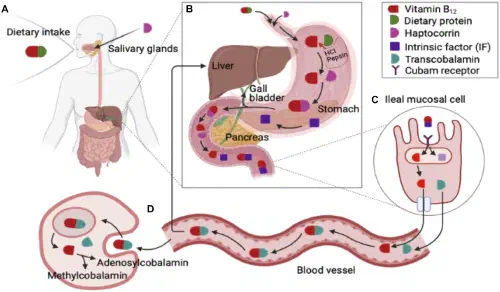
Enter Propionibacterium freudenreichii
If you have ever enjoyed a slice of Swiss cheese, you are already intimately acquainted with the work of Propionibacterium freudenreichii. This safe, food-grade bacterium is famous in the dairy world; it is responsible for producing the carbon dioxide bubbles that form the characteristic “eyes” in Emmental cheese, alongside the propionic acid that gives the cheese its distinctively nutty, sweet flavor.
More crucially for our purposes, P. freudenreichii is a metabolic powerhouse when it comes to synthesizing biologically active cobalamin. When scientists introduce this microbe to plant-based substrates like soybeans, grains, or lupin beans, it gets right to work. Recent experiments have demonstrated that taking this microbe and co-fermenting it alongside traditional culinary fungi or lactic acid bacteria can reliably synthesize nutritionally meaningful amounts of vitamin B12.
Redesigning Tempeh
Tempeh is traditionally produced by fermenting whole soybeans with a filamentous fungus known as Rhizopus oligosporus. The fungus binds the beans into a firm, dense cake that is prized as a high-protein meat alternative. However, standard tempeh does not contain any vitamin B12, simply because the Rhizopus fungi lack the required biosynthetic pathways.
When food scientists tweak the traditional recipe to include P. freudenreichii as a co-culture, the dynamic inside the fermentation chamber shifts dramatically. The fungi and the bacteria begin a highly productive symbiotic relationship. As the mold breaks down the complex carbohydrates and proteins in the soybeans, it creates a nutrient-dense environment loaded with free amino acids and sugars. This allows the Propionibacterium to thrive and continuously pump out cobalamin. Importantly, sensory studies have shown that adding this bacterium doesn’t negatively alter the taste, firmness, or aroma of the final product, preserving the culinary integrity of the tempeh while massively upgrading its nutritional profile.

Grains, Bran, and Sourdough Doughs
It is not just soy that is receiving a microbiological upgrade. Cereal byproducts, such as wheat bran, are famously rich in dietary fiber but often lack high-value micronutrients. By applying specific bacterial consortia to these substrates, researchers can biofortify these otherwise ordinary cereal matrices. An extensive literature review of in-situ B12 biofortification details how meticulously tweaking factors like pH, temperature, and fermentation time can drastically increase the cobalamin yield.
During the fermentation of doughs—such as in sourdough bread-making—lactic acid bacteria generally dominate the microbial scene. Introducing P. freudenreichii into a sourdough-like matrix requires a careful balancing act. The Propionibacteria prefer slightly less acidic environments to reach their maximum B12-producing potential, while lactic acid bacteria rapidly drop the pH. However, when the conditions are dialed in just right, the endogenous microbiota of the grain interacts beautifully with the introduced bacterial strains. This multi-culture fermentation points toward a future where your morning slice of toast could deliver a substantial, natural portion of your daily vitamin B12 requirement.
The Future of Home Nutrition
We are currently on the leading edge of a genuine paradigm shift in home-nutrition and food science. Utilizing live, safe microbes to synthesize essential, complex vitamins right inside our kitchen staples offers a highly decentralized, sustainable approach to combating micronutrient deficiencies.
In a world that is increasingly looking toward plant-based diets for both environmental sustainability and ethical reasons, in-situ biofortification serves as a biological bridge. It perfectly spans the gap between what plants naturally provide and what human biology strictly requires. By treating a block of tempeh or a loaf of bread not just as food, but as a living micro-factory for human health, we can rewrite the nutritional rules of plant-based eating.
References:
- https://www.sciencedirect.com/science/article/abs/pii/S0963996923011730
- https://scijournals.onlinelibrary.wiley.com/doi/10.1002/jsf2.137
- https://www.biorxiv.org/content/10.1101/2022.11.07.515437v1.full